Material focus · 2 October 2026 · 6 min read
Travertine,
a stone of light.
Why this porous stone, used since Antiquity, is back in contemporary interiors, and how to choose it well.
By the Soul Design editorial team
There is something both soft and mineral about travertine. A stone the colour of honey or sand, veined with strata and pitted with small cavities that hold the shadow. Long confined to 1970s floors and hotel bathrooms, it is now returning in solid pieces: monolithic tables, consoles, tops cut from a single block. Its comeback is no accident.
A stone born of water
Travertine is a limestone. It forms where hot springs rich in calcium carbonate rise to the surface: as they cool and release their carbon dioxide, these waters deposit the stone layer upon layer. Gas bubbles and plants caught in the deposit leave behind its characteristic voids. Each block thus keeps the memory of how it was formed.
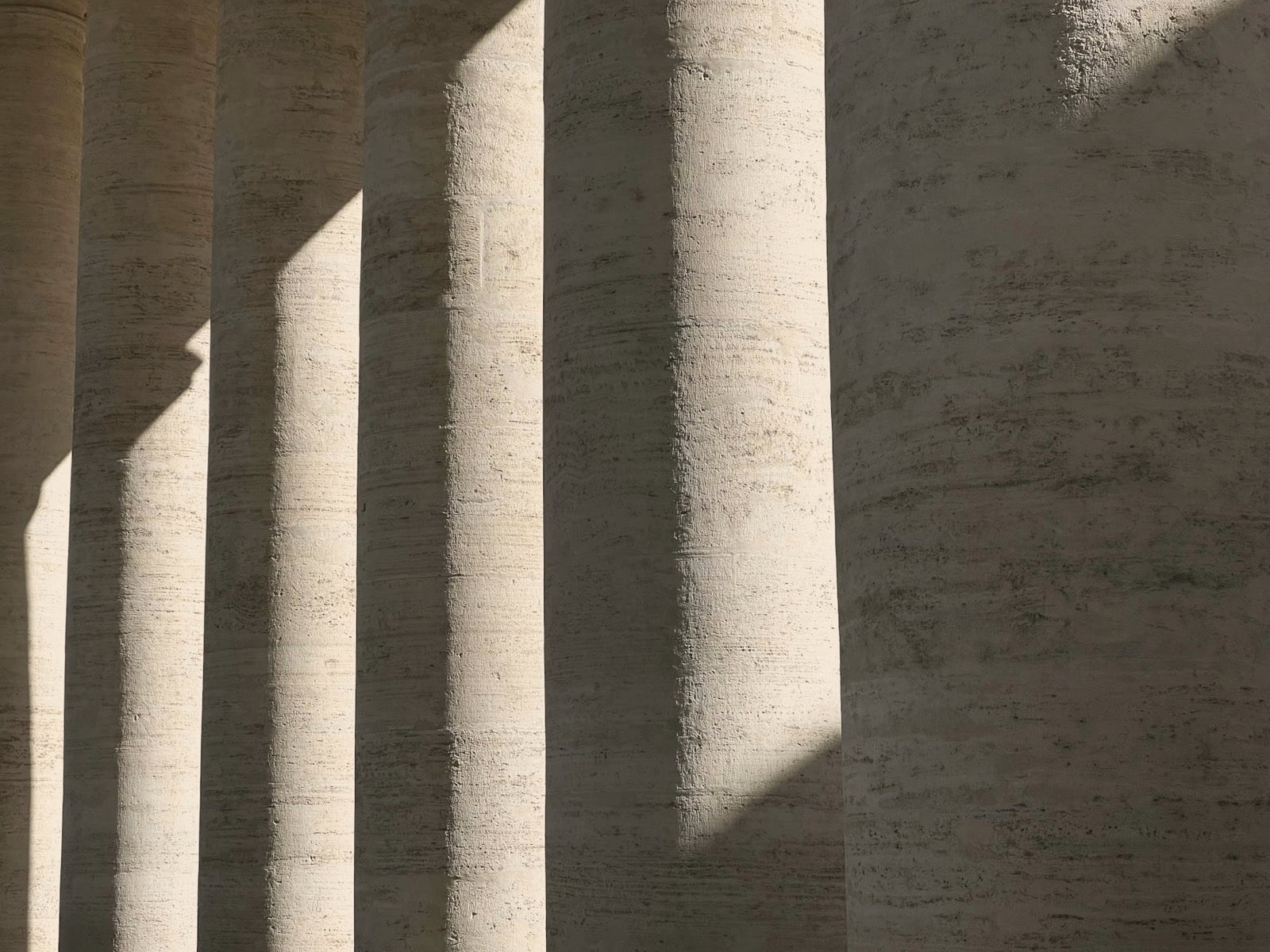
The name comes from the Latin lapis tiburtinus, the stone of Tibur, today’s Tivoli, east of Rome. Its quarries supplied Roman builders for centuries: much of the Colosseum is built of it, as is the colonnade of St Peter’s. Closer to our time, twentieth-century architects chose it for its light and the way it endures.
A matt stone that returns a soft, diffused light, never a cold one.
Why it is back
First, for its colour. In interiors dominated for twenty years by whites and greys, its warm tones — ivory, hazel, blush — add warmth without saturating. It sits naturally with walnut, washed linen and brushed brass: the whole palette we love.
Then, for its substance. At a time when we look for pieces that last, a table cut from the solid has the reassuring weight of something that never dates. It acquires a patina, is handed down, and every top is unique: no two blocks from the same quarry are ever alike.
Choosing it well
Three questions are enough to guide the choice.
The finish. Honed, it is matt and silky to the touch: the one we recommend for a table. Polished, it takes on a slight sheen and stains less quickly, at the cost of a more formal look. Tumbled or brushed, it keeps its relief: superb as cladding, less practical under a plate.
Filling. The natural cavities can be filled with resin or a tinted mortar. For a tabletop this is essential: the surface becomes smooth and nothing can lodge in it. Unfilled travertine is best kept for decorative uses.
The direction of cut. Vein-cut (across the bed), the block reveals parallel, highly graphic strata. Cross-cut (along the bed), it shows a more uniform, cloudy pattern. A matter of taste, which we always show on a sample.
Care, in four simple steps
- A water- and oil-repellent sealant on delivery, renewed every two to three years.
- Wipe up wine, lemon and vinegar straight away: acids etch limestone.
- Clean with clear water and a pH-neutral soap, never with bleach or white vinegar.
- Coasters and placemats, simply: the patina will come, the rings will not.
Where to use it
As a dining or meeting table, it instantly gives a room presence. As a coffee table, it anchors a living room around it. As an entrance console or reception counter, it says a great deal about a place’s hospitality — which is why hoteliers love it so much. One piece of advice: plan for the weight. A 240 cm top often exceeds 150 kg; we always check access and floor loading before delivery.
We bring samples to our meetings, in Levallois-Perret or at your premises: finishes and cut direction are chosen with the stone in hand.